

Blog
Fattoush vs. Tabbouleh: A Guide to Lebanon’s Famous Salads

The search for the best Lebanese food in Sydney often leads curious food lovers to a delightful dilemma: Fattoush or Tabbouleh? These two legendary Lebanese salads grace our tables at Arabella daily, yet many diners wonder about their differences, origins and what makes each special.
While both showcase the Mediterranean love for fresh ingredients and bold flavours, these salads are as distinct as Lebanon’s coastal cities and mountain villages. From the satisfying crunch of Fattoush to the herbaceous symphony of Tabbouleh, understanding these two classics unlocks a deeper appreciation of Lebanese cuisine. Let’s explore the fascinating stories behind these beloved salads that have conquered dinner tables worldwide.
Finding the Best Lebanese Food in Sydney With the Classics
Have you ever wondered why Lebanese salads taste so much better than ordinary garden varieties? The secret lies in their perfect balance of textures, aromas and that special touch of Middle Eastern magic. Let’s dive into what makes these two stars of Lebanese cuisine so special and why they’ve captured hearts (and taste buds) around the world.
Origins and Cultural Significance
Both Fattoush and Tabbouleh have humble beginnings, born from the practical wisdom of Lebanese villagers and their commitment to fresh, seasonal eating.
Fattoush began as a clever solution to day-old bread—a testament to the Lebanese spirit of resourcefulness. Rather than wasting stale pita, clever home cooks would toast or fry it until crisp, then toss it with garden-fresh vegetables and a tangy sumac dressing. The satisfying crunch of the bread against the juicy vegetables creates a textural symphony that’s simply mouthwatering.
Tabbouleh, meanwhile, celebrates the abundant parsley that flourishes in Lebanon’s fertile soil. What many don’t know is that authentic Lebanese Tabbouleh is primarily a parsley salad with just a sprinkling of bulgur wheat—quite different from international versions that often reverse these proportions! This vibrant green dish represents Lebanese cuisine’s deep connection to the land and its bounty.
Fattoush: The Rustic Bread Salad That Captures Hearts
The magic of Fattoush lies in its contrasting textures and bright flavours. When you take your first bite at our best Lebanese restaurant, notice how the crunchy toasted pita pieces soften slightly from absorbing the lemony dressing without losing their delightful bite.
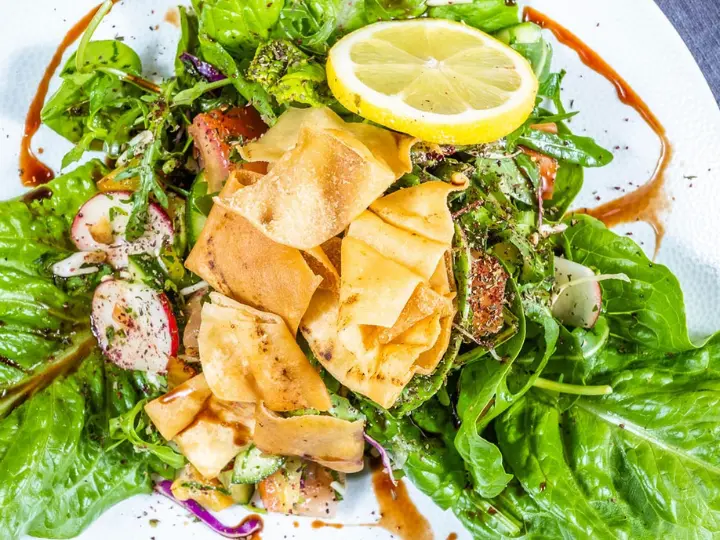
A proper Fattoush always includes:
1. Toasted or fried pita bread pieces
2. Crisp romaine lettuce
3. Juicy tomatoes and cucumbers
4. Radishes for a peppery kick
5. Spring onions for sharpness
6. Fresh mint and parsley
7. Sumac-infused lemon dressing
The distinctive tang of sumac(a deep red spice with lemony notes gives Fattoush its characteristic flavour profile. When drizzled with good olive oil and fresh lemon juice, these simple ingredients transform into something truly spectacular. Some can add their own special touches, perhaps pomegranate seeds for sweetness or a sprinkle of za’atar for herbaceous depth.
Tabbouleh: The Green Leafy Tasty Salad from Lebanon
While Fattoush embraces rustic charm, Tabbouleh represents precision and balance. Making a perfect Tabbouleh is something of an art form in Lebanese households, one that requires patience and a gentle hand.
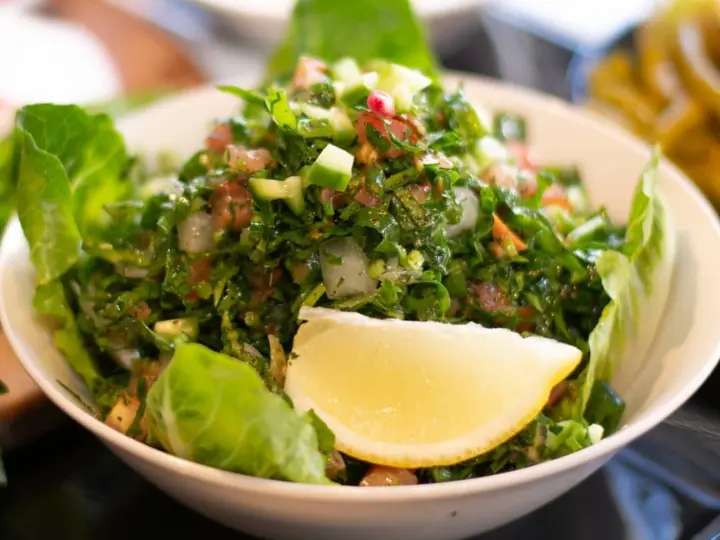
The foundation of authentic Tabbouleh includes:
1. Generous amount of finely chopped parsley
2. Fresh mint leaves, delicately minced
3. A modest amount of soaked fine bulgur wheat
4. Diced tomatoes and spring onions
5. Simple dressing of lemon juice and olive oil
6. A pinch of salt and pepper
The real secret to scrumptious Tabbouleh? It’s all in the chopping. Parsley must be cut by hand (never in a food processor) to prevent bruising and maintain its bright flavour. Each ingredient should be uniform in size, creating a harmonious blend where no single element overwhelms the others.
Why These Salads Matter?
In Lebanon, these salads aren’t merely side dishes—they’re central to the mealtime experience and deeply woven into the cultural fabric. When Lebanese families gather for meals, everyone eagerly anticipates the moment these fresh creations reach the table.
These salads reflect core values of Lebanese cuisine: freshness, simplicity and the celebration of seasonal produce. They embody the Mediterranean diet at its finest – nutritious and bursting with natural flavours without heavy dressings or unnecessary additives.
At social gatherings, you’ll often find both Fattoush and Tabbouleh served alongside mezze platters. The fresh, palate-cleansing qualities of these salads provide the perfect counterpoint to richer dishes like creamy hummus or savoury grilled meats.
Health Benefits: Why Lebanese Salads Should Be in Your Regular Rotation
Beyond their delicious flavours, both Fattoush and Tabbouleh offer impressive nutritional profiles.
Tabbouleh is a veritable powerhouse of nutrition. Parsley, its star ingredient, contains more vitamin C than oranges and delivers plenty of iron, calcium and antioxidants. The small amount of bulgur provides fibre and makes the salad more filling without adding many calories.
Fattoush, with its rainbow of vegetables, provides a wide spectrum of vitamins and phytonutrients. The olive oil in both salads delivers heart-healthy monounsaturated fats, while lemon juice aids digestion and enhances nutrient absorption.
Making These Salads at Home vs. The Restaurant Experience
While both salads are wonderful prepared at home, there’s something special about experiencing them at a traditional Lebanese restaurant like ours. Professional preparation brings out nuances that can be hard to replicate in home kitchens.
At Arabella, we source the freshest produce and highest-quality ingredients to create authentic versions of these beloved classics. Our chefs understand the delicate balance of flavours required and bring generations of culinary knowledge to each plate.
Which Should You Try First?
Still can’t decide between Fattoush and Tabbouleh? Consider your preferences:
If you love varied textures and hearty salads with a satisfying crunch, Fattoush might become your new favourite.
If you prefer bright, herb-forward flavours and lighter fare, Tabbouleh could be your perfect match.
Or better yet—why choose? In Lebanon, these salads frequently appear together on the same table, complementing each other beautifully.
A Perfect Pairing
Both salads pair wonderfully with grilled meats, particularly lamb and chicken. They also make excellent companions to falafel, halloumi or our wide selection of traditional Lebanese dips.
For the best Lebanese restaurant experience, we recommend trying these salads alongside other authentic dishes to appreciate how they balance and enhance the overall meal.
The Taste of Lebanon Awaits
Whether you’re already a fan of Lebanese cuisine or just beginning to explore its wonders, Fattoush and Tabbouleh offer delightful entry points into this rich culinary tradition. These aren’t just salads—they’re edible ambassadors of Lebanese culture, carrying centuries of history and tradition in every bite.
At Arabella, we take pride in presenting these beloved classics in their most authentic form while adding our own special touch of warmth and hospitality.
Come experience the fresh, vibrant flavours of Lebanon’s famous salads and discover why our patrons consider us the best Lebanese food in Sydney—book your table today and let us take you on a memorable journey through Lebanon’s most treasured culinary traditions.